Instant B2B Payments Are Becoming a Business Banking Advantage
Business clients do not just want payments to move faster. They want certainty.
When a company sends money to a supplier, contractor, landlord, insurance claimant, or business partner, “pending” is not always good enough. Businesses want to know that the payment was sent, received, and recorded. That is why instant B2B payments are becoming more important for banks, payment providers, and the companies they serve.
The issue is not only speed. It is visibility, control, and stronger business relationships.
Why This Matters in 2026
Instant payments have moved well beyond the early-adoption stage. In 2026, the Federal Reserve’s FedNow network reports more than 1,800 participating financial institutions and service providers, while businesses increasingly expect money movement to match the always-on pace of modern operations. As availability expands, the competitive question is shifting from whether a bank or payment provider can support instant payments to how effectively it can combine speed with useful reporting, fraud controls, approval workflows, and treasury visibility.
For businesses, this makes instant payments less of a novelty and more of an operational tool. Companies that prepare their systems and controls now may be better positioned to improve working capital, strengthen vendor relationships, and respond faster when payments are time-sensitive.
Why Businesses Care About Instant B2B Payments
Cash flow is one of the most important parts of running a business. Even healthy companies can feel pressure when money is delayed, invoices are outstanding, or vendors need to be paid before incoming funds settle.
Instant B2B payments can help reduce that pressure.
They can allow businesses to pay suppliers faster, confirm settlement immediately, reduce reliance on checks, improve treasury operations, and manage working capital with more accuracy.
For banks and financial institutions, instant payment services can also strengthen client relationships. A business that depends on its bank for faster money movement may be more likely to view that institution as a primary financial partner, not just a place to hold deposits.
The Opportunity Goes Beyond the Payment Itself
Instant payments are not just another rail. They can become part of a larger business service.
Banks and payment providers can build tools around:
- Payment confirmation
- Invoice matching
- Cash-flow visibility
- Treasury dashboards
- Fraud monitoring
- Vendor payment controls
- Real-time alerts
- Approval workflows
- Payment data and reporting
For business clients, these features may matter as much as the speed of the transaction. A company does not only need money to move. It needs to understand where the money went, who approved it, when it arrived, and how it fits into cash planning.
Businesses Should Prepare Internally
As instant B2B payments become more available, businesses should review their own procedures.
Key areas to evaluate include:
- Who can approve outgoing payments
- What dollar limits apply
- How vendor bank details are verified
- How payment requests are documented
- How urgent payment requests are reviewed
- How errors are escalated
- How fraud alerts are handled
Instant payments can reduce delays, but they can also reduce the time available to stop a bad payment. That makes internal controls essential.
The Main Takeaway
Instant B2B payments are becoming a competitive advantage.
For banks, they can deepen commercial relationships. For businesses, they can improve cash flow, reduce uncertainty, and support faster operations. But speed alone is not enough.
The real value comes when instant payments are paired with better data, stronger controls, clear approval processes, and practical treasury tools.
Businesses should start treating instant payments as part of their financial operations strategy, not just as a faster version of what they already do.
Instant Payments Are Moving From Optional to Expected: What Businesses Should Prepare For
Real-time payments are becoming harder for businesses to ignore.
As FedNow continues adding banks, credit unions, and account access, instant payments are moving from an industry concept to a practical business tool. The issue is no longer whether faster payments will matter. The issue is how quickly businesses, banks, and payment providers can build useful ways to send and receive money in seconds.
For merchants and business owners, this shift matters because payment timing affects cash flow, customer experience, vendor relationships, refunds, payroll, insurance payouts, earned wage access, and emergency payments. A payment that settles instantly can reduce uncertainty. A payment that takes days can create operational pressure.
That difference can be meaningful.
Why Instant Payments Matter
Traditional payment methods still work, but they do not always match the speed of modern business. Customers expect faster refunds. Vendors may want quicker confirmation. Employees may need earned wages sooner. Businesses may need to move money immediately during high-pressure situations.
Instant payments can help solve those timing problems.
But businesses should not assume every “instant payment” option works the same way. Some banks may only allow accounts to receive instant payments, while others support both sending and receiving. That distinction matters. A business that can receive instant payments but cannot send them may still be limited in how much value it gets.
Do Not Confuse Speed With Simplicity
Instant payments can improve cash flow, but they also require stronger internal controls.
Once money moves instantly, there may be less time to catch errors. Businesses should review who is authorized to send payments, what approval limits apply, how vendor information is verified, and how suspicious requests are handled.
Useful controls may include:
-Dual approval for larger payments
-Verified vendor bank information
-Transaction limits by employee role
-Daily review of outgoing payment activity
-Clear refund procedures
-Written approval policies
-Real-time fraud alerts
Businesses should also train staff to slow down when payment requests feel urgent. Fraudsters often rely on pressure, confusion, or fake authority to push payments through quickly.
Build Use Cases Before You Need Them
Instant payments are most valuable when they solve a specific problem. Businesses should identify where faster money movement would help most.
Common use cases may include:
-Customer refunds
-Vendor payments
-Payroll corrections
-Insurance or claims payments
-Emergency disbursements
-Real estate or high-value transactions
-Contractor payments
-Account-to-account transfers
The takeaway is straightforward: faster payments are becoming part of the normal business environment.
Merchants and business owners that prepare now can use instant payments to improve cash flow and customer service. But speed should be paired with strong controls, clear procedures, and careful payment authorization.
Instant payments can be a major advantage, but only if the business is ready for money to move that quickly.
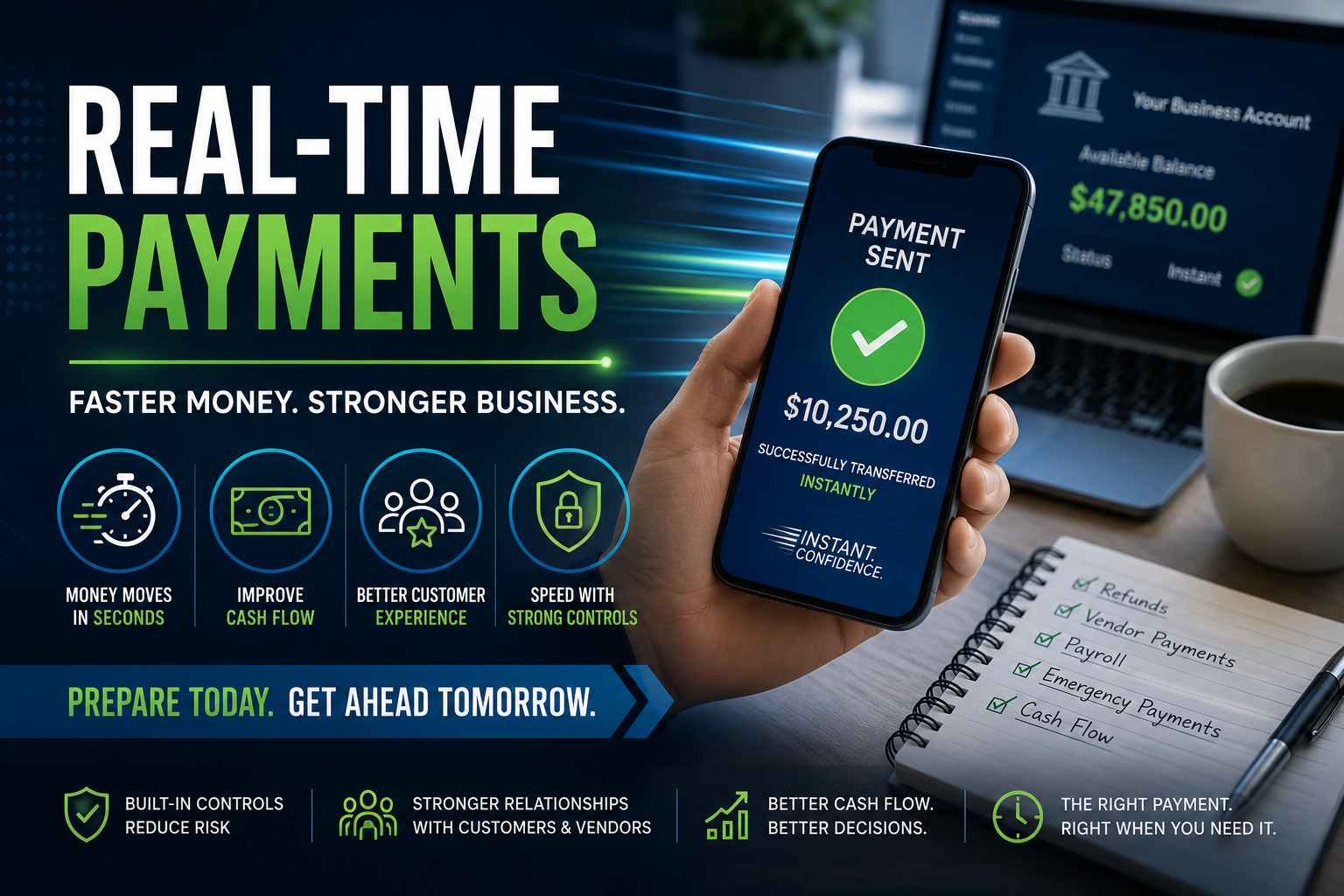
Real-time payments are quickly becoming a competitive advantage. Learn how instant payments can improve cash flow, strengthen customer relationships, and streamline operations—while highlighting the controls every business should have in place before moving money in seconds.
Consumers Are Still Spending, But That Does Not Mean They Feel Strong
A full register does not always mean a healthy customer.
That is one of the most important things businesses should understand right now. Consumer spending may be rising, but higher spending does not automatically mean people are buying more or feeling more confident.
In many cases, customers are simply paying more for the same things.
Groceries cost more. Insurance costs more. Housing costs more. Utilities, subscriptions, childcare, transportation, and everyday services all take a larger share of the paycheck. So while the total dollars spent may look strong, the customer behind that spending may have less breathing room than before.
That matters for any business trying to forecast demand.
If sales are up because prices are higher, not because customers are buying more, the business may be reading the market wrong. A merchant might assume demand is strong when customers are actually stretched. A lender might assume repayment risk is stable when borrowers are leaning more heavily on credit. A service provider might assume customers will tolerate another price increase when they are already close to cutting back.
Consumers under pressure do not always disappear immediately. They adjust.
They trade down. They delay larger purchases. They use installment payments. They reduce savings. They keep some subscriptions and cancel others. They may continue spending on dining, entertainment, convenience, or family needs because those purchases still feel important, even during tighter times.
That makes behavior harder to read.
A customer may still be active, but more price-sensitive. They may still buy, but less often. They may still subscribe, but downgrade. They may still use credit, but with less room for another payment.
Businesses should look beyond total revenue and pay closer attention to what customers are actually doing. Are unit sales rising, or just dollar sales? Are repeat purchases slowing? Are refunds increasing? Are customers shifting to lower-priced options? Are declined payments, late payments, or cancellations increasing?
Those signals matter.
The companies that respond well will be the ones that protect value. Clear pricing, flexible payment options, fair return policies, reliable service, and honest communication can make a difference when customers are feeling squeezed.
The takeaway is not that consumers have stopped spending. They have not.
The takeaway is that spending is not the same as strength. Businesses that understand that difference will make better decisions, build more trust, and avoid being surprised when customers finally reach their limit.
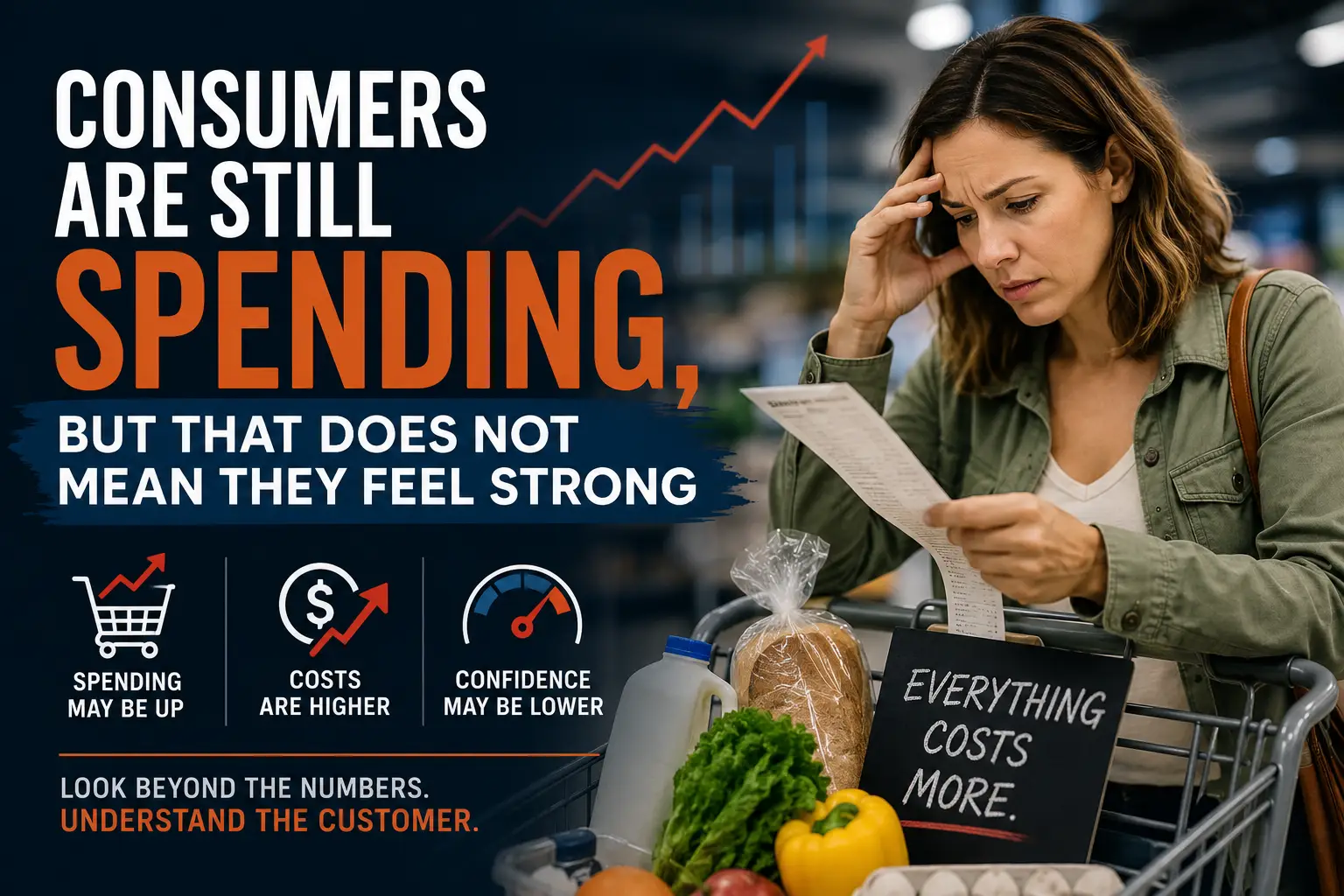
Consumer spending may still be rising, but that doesn’t necessarily mean consumers are financially stronger. Learn why businesses need to look beyond revenue and understand the warning signs hidden beneath today’s spending trends.
Faster Payments Are Becoming a Small Business Advantage
Small business owners know the stress of waiting.
Waiting for a customer payment to clear. Waiting to pay a supplier. Waiting on funds before making payroll. Waiting to move money from one account to another before a deadline.
That waiting can create real pressure, even when the business is doing well.
This is why faster payments are becoming more important for small and midsize businesses. Real-time payments, same-day ACH, instant transfers, and faster digital banking tools are no longer just nice extras. For many businesses, they are becoming part of how cash flow gets managed.
Cash flow is not only about how much money a business makes. It is about when that money is available.
A business can have strong sales and still run into trouble if funds are delayed while expenses are due now. Rent, payroll, taxes, inventory, contractors, refunds, and vendor bills all operate on their own timelines. Faster payment tools can help close that timing gap.
The benefit is flexibility.
A restaurant may need to pay a supplier quickly. A contractor may need to move funds for materials. A retailer may need to refund a customer promptly. A service business may need to make payroll before receivables settle. In each case, payment speed can reduce friction and give the owner more control.
But speed should still come with discipline.
Business owners should compare payment fees, monthly service costs, transaction limits, cutoff times, fraud protections, and internal approval processes. A faster payment option is useful only if it fits the way the business actually operates.
There is also a security side to consider. When payments move quickly, mistakes and fraud can move quickly too. Businesses should use dual approval for larger transactions, limit employee permissions, confirm vendor bank details, and review outgoing payments daily.
The larger lesson is simple: payment timing is now a competitive issue.
Businesses that understand their payment options can manage cash more confidently, respond faster to problems, and build stronger relationships with vendors and customers. Faster payments will not fix every cash flow challenge, but they can give small businesses more room to operate.
And for many owners, that room matters.
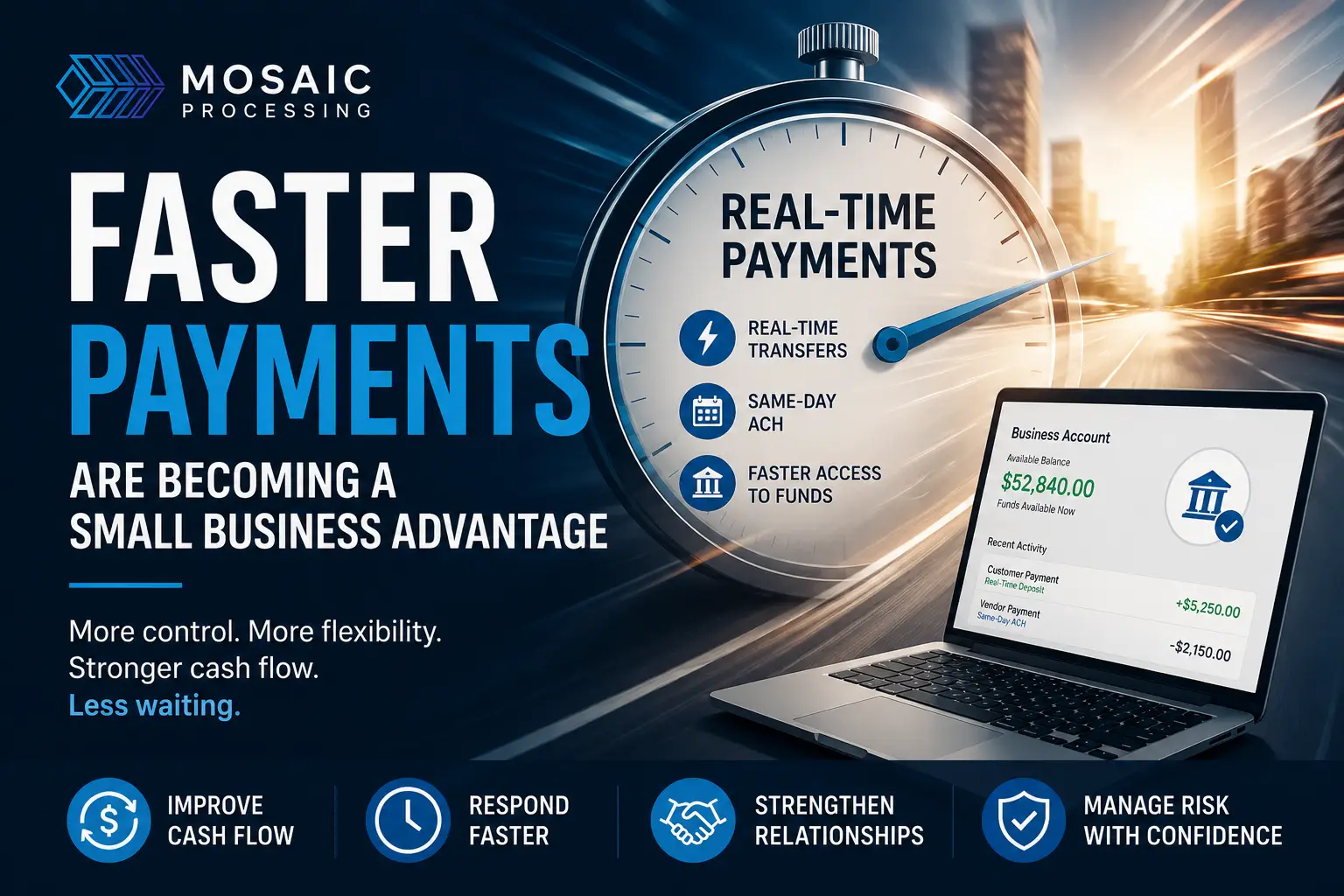
Cash flow isn’t just about how much money your business earns—it’s about how quickly you can access it. As real-time payments and faster banking become the norm, businesses that move money faster gain greater flexibility, stronger cash flow, and a competitive advantage.
Your Face May Become Your Wallet. Here’s What Merchants Need to Think About Now
Payments are getting more personal.
For years, the industry has focused on making checkout faster: tap a card, scan a phone, click a saved payment method, approve a transaction with a fingerprint. Now the next step is becoming clearer. Digital identity and biometric payments are starting to merge.
That means a customer’s face, fingerprint, or mobile ID may eventually help them enter a venue, verify their age, access loyalty rewards, and complete a payment.
For merchants, this could be a major improvement. Faster lines, fewer abandoned checkouts, smoother loyalty enrollment, and stronger fraud prevention all sound good. In busy environments like restaurants, stadiums, hotels, airports, and retail stores, removing even a few seconds from each transaction can make a real difference.
But biometric payments come with a different level of responsibility.
A credit card can be replaced. A password can be reset. A face cannot.
That is why customer trust has to come before speed. If a business plans to use biometric tools, customers need to clearly understand what is being collected, why it is being used, where it is stored, and whether they can say no. This cannot be hidden in fine print or treated like a routine software update.
The experience also has to feel natural. Customers should never be surprised by a face scan or identity check. If the process feels unclear, invasive, or forced, the technology may create more concern than convenience.
Merchants should also remember that not every customer will want to use biometrics. Some people will prefer cards, cash, mobile wallets, or traditional IDs. Offering biometric payment as an option is very different from making it the only path.
Before adopting these tools, businesses should review their privacy policies, vendor contracts, data security controls, staff access, customer consent process, and state-level compliance obligations. They should also decide how they will handle customer questions, opt-outs, and disputes.
The future of checkout may be faster, but faster is not enough.
The businesses that benefit most from biometric payments will be the ones that make customers feel informed, respected, and in control. Convenience can open the door. Trust is what keeps customers willing to walk through it.
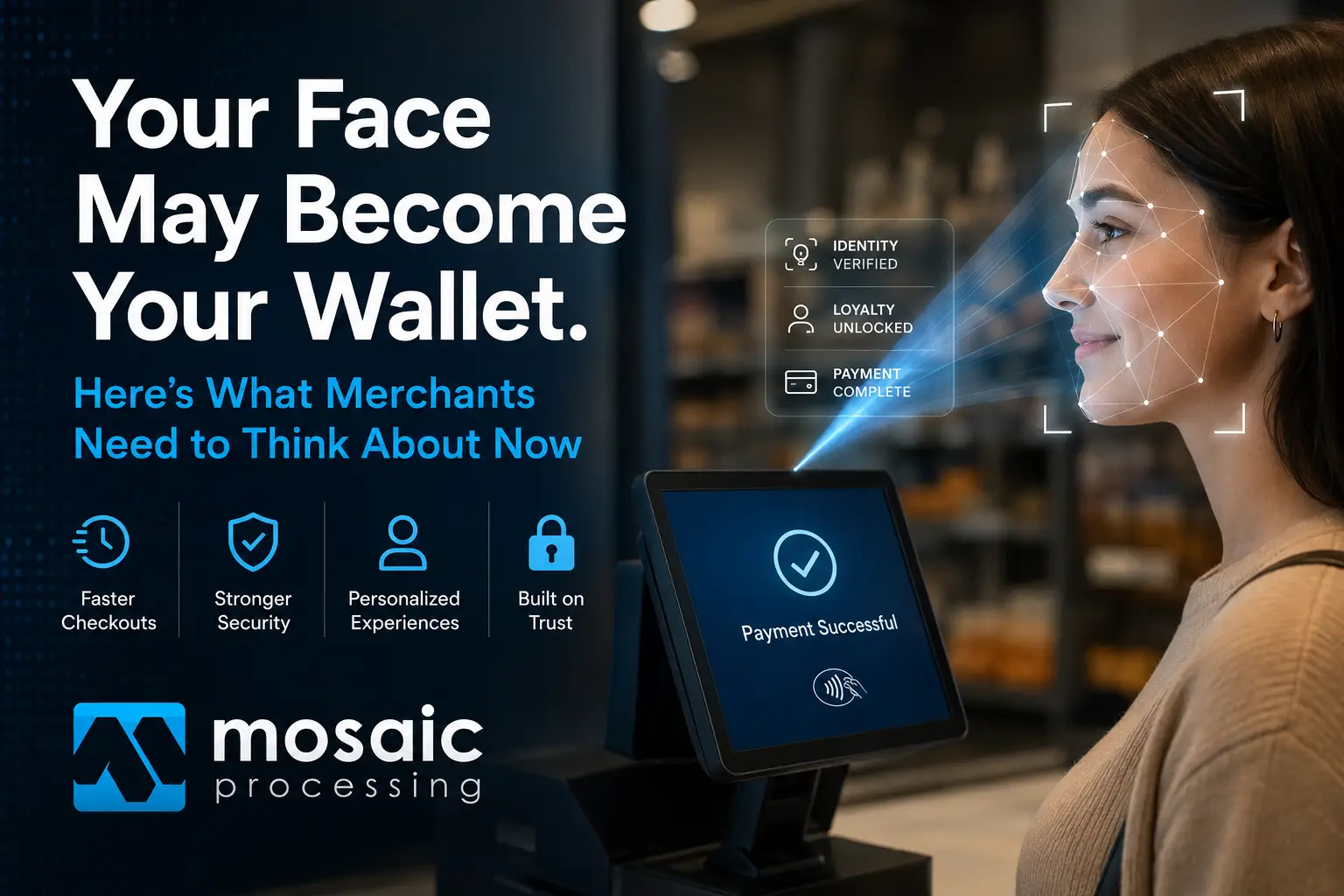
Biometric payments are moving from science fiction to the checkout line. As facial recognition and digital identity become part of everyday commerce, merchants who balance convenience with transparency, privacy, and customer trust will be best positioned for the future.
High-Risk vs. Low-Risk Industries
What the Labels Really Mean (and Why They Matter More Than Ever)
In payments, finance, insurance, and compliance, we love neat labels.
High risk. Low risk. Two words that sound definitive; but hide a lot of nuance.
Too often, businesses hear “high risk” and assume it means bad actors, unstable companies, or shady operations. Meanwhile, “low risk” gets treated like a badge of honor that guarantees safety.
The truth is far more interesting; and far more useful if you’re running, advising, or underwriting a business.
Let’s break it down.
What “Risk” Actually Means
In most regulated industries, risk has nothing to do with morality or quality.
It’s about predictability.
Risk is measured by questions like:
- How predictable are revenue and transaction patterns?
- How often do customer disputes occur?
- How easy is it to verify delivery and fulfillment?
- How exposed is the business to regulatory change?
- How quickly can issues compound if something goes wrong?
That’s it.
A business can be well-run, ethical, profitable; and still be considered high risk
Examples: What “High Risk” and “Low Risk” Look Like in Practice
Commonly Labeled High-Risk Industries:
- Subscription and recurring billing businesses
- Travel and ticketing
- Digital services, coaching, and online education
- Supplements and wellness products
- Marketplaces and platforms
- Regulated financial or healthcare services
Commonly Labeled Low-Risk Industries:
- Grocery and convenience retail
- Fuel stations
- Quick-service restaurants
- Brick-and-mortar retail with immediate delivery
- Utility and essential services
Then immediately follow with:
Why Some Industries Are Labeled High Risk
High-risk industries tend to share a few structural traits:
1. Delayed or Intangible Fulfillment
If a customer pays today but receives value later (or in stages), uncertainty increases.
Think:
- Subscriptions
- Travel
- Digital services
- Coaching, education, or memberships
Even when delivered properly, delays create confusion—and confusion drives disputes.
2. Elevated Dispute Probability
Some industries naturally experience more chargebacks, refunds, or customer questions—not because of fraud, but because expectations are harder to align at scale.
More volume + more emotion = more friction.
3. Regulatory Volatility
Industries tied to evolving regulations (health, financial services, supplements, gaming, etc.) face moving goalposts.
What’s compliant today might require adjustments tomorrow; and that uncertainty raises risk scores.
4. Rapid Growth Curves
Ironically, fast growth increases risk.
Systems break. Support lags. Policies get stress-tested. None of that means the business is unhealthy—it means it’s scaling.
What Makes an Industry “Low Risk”
Low-risk industries tend to be boring; and that’s not an insult.
They usually offer:
- Immediate, tangible delivery
- Simple pricing
- Clear receipts and documentation
- Low emotional charge in customer decisions
Think fuel stations, grocery stores, basic retail.
Predictability is king.
The Big Misconception: High Risk ≠ Poor Quality
This is where many conversations go wrong.
High-risk industries:
- Drive innovation
- Push new business models forward
- Serve emerging consumer needs
- Create outsized economic value
They’re not dangerous; they’re complex.
And complexity requires better systems, not avoidance.
The Real Question Businesses Should Ask
Instead of asking:
“Are we high risk or low risk?”
Ask:
“Do our systems match our risk profile?”
Because a high-risk business with strong controls is often safer than a low-risk business running on autopilot.
Risk isn’t eliminated. It’s managed; or ignored.
Why This Distinction Matters Now
As monitoring programs tighten, ratios get recalculated, and automation replaces nuance, businesses are increasingly judged by numbers without context.
Understanding why your industry is classified the way it is helps you:
- Design smarter customer journeys
- Prevent disputes before they escalate
- Communicate more effectively with partners and platforms
- Build resilience instead of reacting to penalties
Final Thought
High risk doesn’t mean fragile. Low risk doesn’t mean immune.
The strongest businesses aren’t the ones labeled “safe”—they’re the ones that understand their risk and build accordingly.
If you operate, advise, or invest in growth-driven industries, that distinction isn’t academic.
It’s strategic.
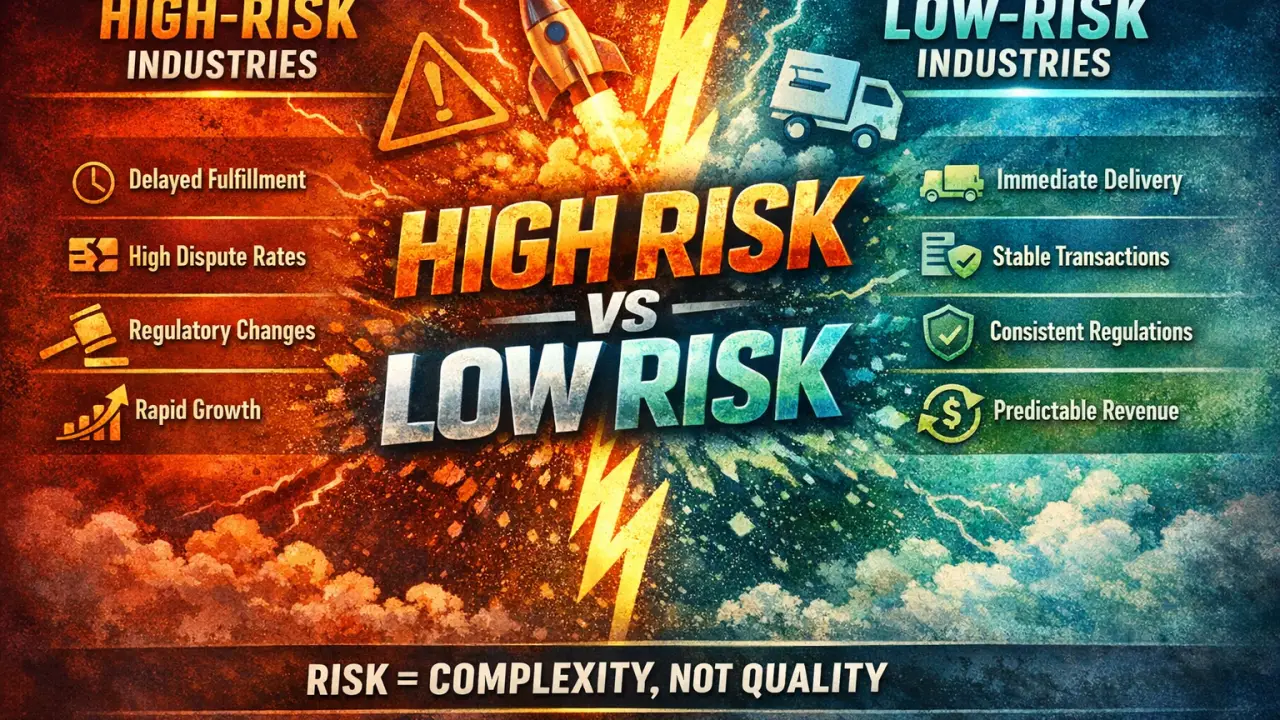
Not all businesses are viewed the same by payment processors. Discover what determines whether your business is classified as high risk or low risk, how that impacts processing costs and approvals, and what you can do to secure the best possible payment solution.
The Payment Processing Industry Is Quietly Undergoing a Massive Shift
If you’re only watching interchange rates, you’re missing the real story.
The payment processing world is evolving rapidly; not in small, incremental steps; but in structural shifts that will redefine how merchants think about revenue, risk, and customer experience.
Stripe recently posted their annual letter. Here are the biggest trends we’re seeing right now:
1️⃣ Debit Innovation Is Accelerating (Beyond Traditional Card Rails)
For years, Visa and Mastercard dominated the conversation. That’s changing.
New debit routing strategies, alternative clearing networks, and non-traditional processing channels are reshaping cost structures for merchants. These models reduce interchange exposure and increase efficiency; especially in high-risk and emerging industries.
The takeaway: Processors who innovate outside legacy rails will win.
2️⃣ Cost Transparency Is Becoming a Competitive Weapon
Merchants are more sophisticated than ever.
They now understand:
- Effective rate vs. qualified rate
- True chargeback cost
- Hidden network and compliance fees
Processors who cannot clearly articulate savings; or worse, hide margins in complexity; are losing credibility.
Transparency isn’t optional anymore. It’s strategic.
3️⃣ Chargeback & “Friendly Fraud” Pressure Is Exploding
Disputes are no longer a back-office nuisance. They’re a profit killer.
For every $1 in chargebacks, merchants are losing multiples in:
- Fees
- Lost goods
- Operational labor
- Increased monitoring risk
Pre-dispute resolution, automation, and rapid refund tools are becoming critical infrastructure; not optional add-ons.
Margin protection is the new growth strategy.
4️⃣ Compliance & Regulatory Scrutiny Are Intensifying
From cannabis to online gaming to emerging digital verticals, regulatory oversight is increasing.
Processors who:
- Build compliant network structures
- Control routing intelligently
- Partner with forward-thinking sponsor banks
…will outperform those relying on outdated models.
Innovation without compliance is a short runway.
5️⃣ Vertical Specialization Is Winning
The “one-size-fits-all processor” model is fading.
Merchants want partners who understand:
- Their specific risk profile
- Their chargeback patterns
- Their industry regulations
- Their operational realities
Processors that build vertical expertise; instead of generic solutions’ are capturing long-term loyalty.
6️⃣ Merchants Want Revenue Strategy — Not Just Processing
This is the biggest shift of all.
Processing is no longer viewed as a utility expense. It’s becoming a lever for:
- Margin expansion
- Cash flow improvement
- Risk reduction
- Competitive differentiation
The most successful processors today aren’t selling terminals.
They’re delivering financial strategy.
What This Means Going Forward
The payment processing industry is consolidating around innovation, transparency, and specialization.
Those who:
- Embrace alternative debit networks
- Invest in automation
- Lead with compliance
- Protect merchant margins
…will define the next decade.
Those who don’t will compete on price until there’s nothing left to compete on.
If you’re in fintech, payments, cannabis, ecommerce, or retail — now is the time to rethink your processing strategy.
The infrastructure is changing.
The question is: are you? Let us know how we can help you prepare. www.mosaicprocessing.net
The payments industry is changing faster than ever, driven by new technology, shifting consumer expectations, and evolving regulations. Learn why businesses that proactively optimize their payment infrastructure will be better positioned to reduce costs, improve customer experiences, and stay ahead of the competition.