
Checkout is no longer just about accepting cards.
As more platforms add pay-by-bank options, merchants should pay close attention to how customers want to complete purchases. Some customers prefer credit cards. Others prefer debit cards, digital wallets, buy now pay later, or direct bank payments. The businesses that offer trusted choices may have a better chance of completing the sale.
The issue is simple: a customer can want to buy and still fail to complete checkout if the payment option does not work for them.
A card may be temporarily blocked. A customer may not want to use available credit. A buyer may trust a bank login more than entering card information. In other cases, the customer may simply prefer a payment method they already know.
When that preferred option is missing, the sale can disappear.
Why Payment Choice Affects Conversion
Many merchants focus heavily on product, pricing, advertising, and website design. Those things matter. But checkout is where the transaction either happens or does not.
If payment options are limited, confusing, or unreliable, customers may abandon the purchase even after deciding to buy.
Adding a pay-by-bank option can create another path to completion. It does not need to replace cards. In most cases, it should sit alongside card payments, wallets, and other familiar choices.
The goal is not to overwhelm the customer. The goal is to give them a trusted way to pay.
What Merchants Should Review Before Adding Pay-by-Bank
Before adding a new payment method, merchants should understand how it works operationally.
Important questions include:
How quickly is the payment confirmed?
When does settlement occur?
What happens if the customer disputes the transaction?
Who absorbs return or dispute costs?
How are recurring payments handled?
What customer authentication is required?
How does the payment method appear in reporting?
Does it create extra accounting work?
Merchants should also make sure customer communication is clear. If buyers are asked to log in through a bank connection, the checkout page should explain the process in simple terms. Confusion can reduce trust.
Do Not Ignore Dispute Risk
Pay-by-bank may reduce some card-related issues, but it does not eliminate risk.
Merchants still need documentation. They should retain order confirmations, customer communications, transaction timestamps, product delivery records, refund policies, and proof of service access when applicable.
For recurring payments, merchants should also preserve authorization records and cancellation terms.
A new payment method can improve conversion, but only if the back office is ready to support it.
The Main Takeaway
Payment choice is becoming part of the customer experience.
Merchants that only think about payments as a processing function may miss opportunities to improve checkout completion. By offering trusted options such as cards, wallets, and pay-by-bank, businesses can reduce friction and help customers complete purchases they already intended to make.
The best checkout experience is not always the one with the most payment buttons. It is the one that gives the right customer the right option at the right moment.
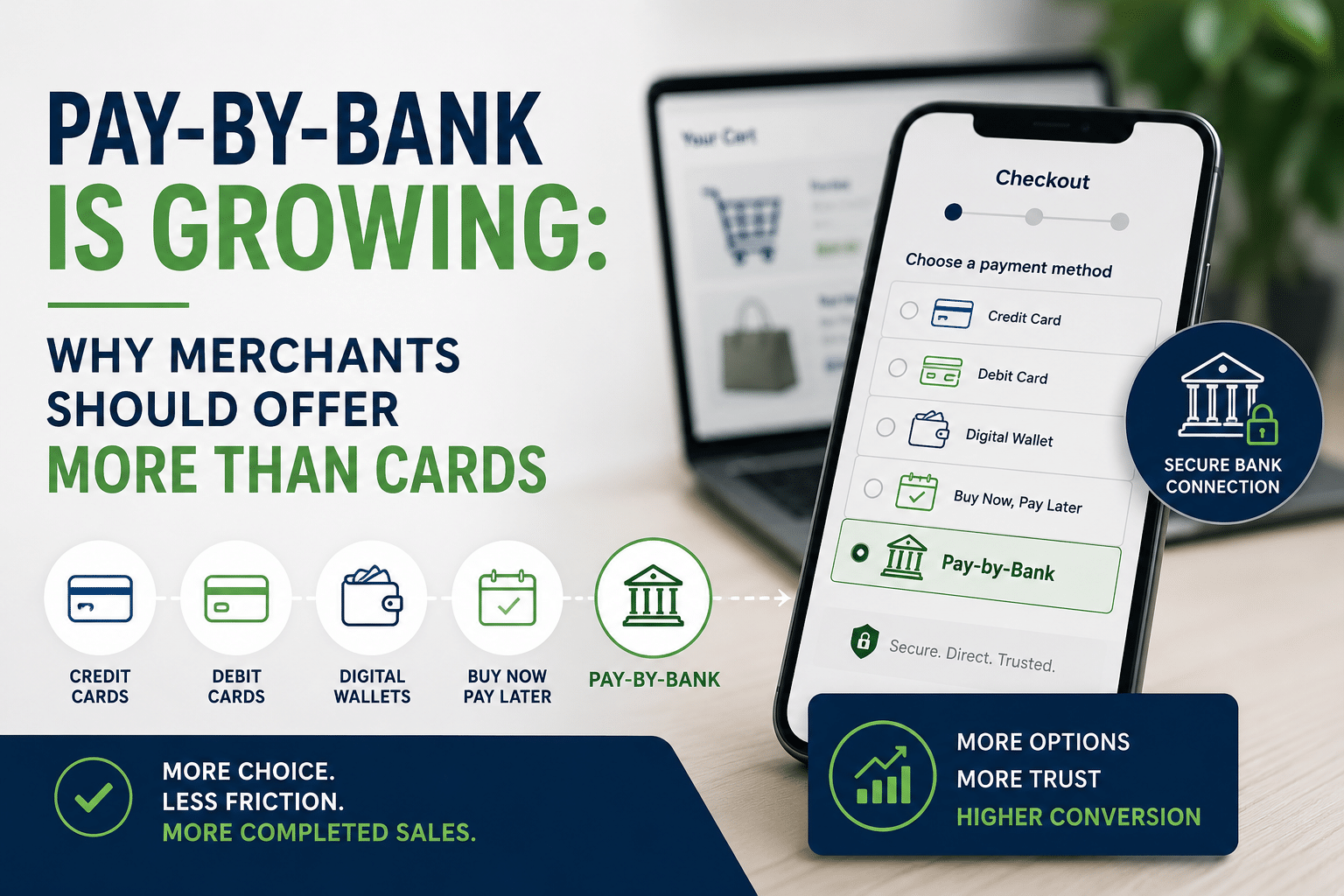
Customers expect payment flexibility, and merchants that offer more than just card payments may see stronger checkout completion. As pay-by-bank adoption grows, businesses should understand how it fits alongside cards, wallets, and other payment methods to create a smoother, more trusted customer experience.